

Busworld represented the European coach industry at the CIVITAS Conference in Thessaloniki from 15 to 17 September, bringing the coach sector’s perspective to the debate on connected tourism mobility, city access and future mobility infrastructure.
During the panel debate on Connected Tourism Mobility, Françoise Guaspare, representative of Île-de-France Mobilités and member of the EU Expert Group for Urban Mobility (EGUM), highlighted the sustainable, affordable and inclusive character of coach tourism. At the same time, she acknowledged the pressure that mass tourism can place on cities and their residents.
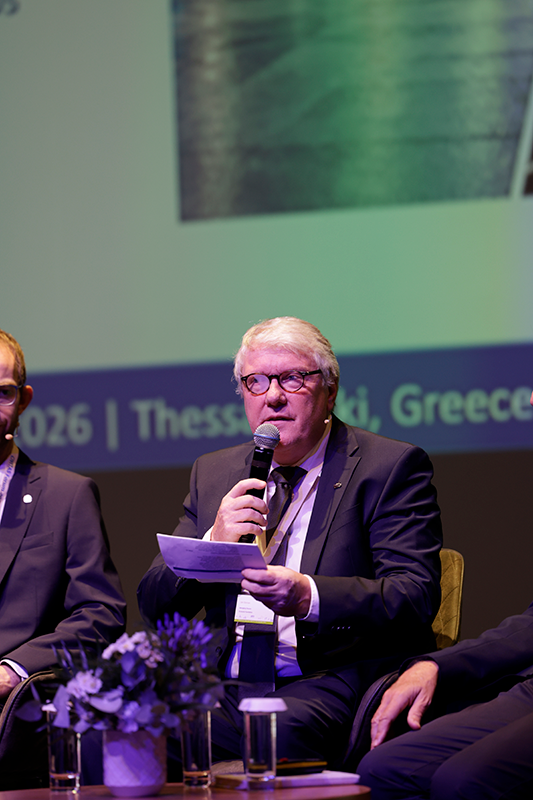
Busworld highlights five priorities for coach tourism
Speaking on behalf of Busworld, Jan Deman highlighted five points that are particularly relevant to the relationship between coach tourism and cities.
First, coach tourism is one of the more manageable forms of mobility for city governments. However, coach operators are confronted with a lack of harmonisation between city access regulations and with different procedures for implementing these regulations. This creates a significant administrative burden for operators.
Deman also stressed the importance of the coach’s door-to-door service, which remains an important incentive for coach travellers.
Another priority is closer cooperation between city governments, coach operators and technology providers. According to Busworld, creating a platform for better mutual understanding between these stakeholders could be an important step towards solutions that benefit all parties involved.
Finally, Deman pointed to the economic added value of coach tourism for cities, which is often insufficiently known and therefore underestimated. Figures mentioned during the debate put this value at around €14 billion for cities in Germany and around €10 billion in the United Kingdom.
Harmonising city access regulations
In his response, EU Commissioner for Mobility and Tourism Apostolos Tzitzikostas said that there is momentum to address these issues, as tourism and mobility are now in the hands of the same European Commissioner.
The harmonisation of city access regulations and digitalisation of access applications are already on the agenda.
Cities are also being called upon to include tourism mobility in their Sustainable Urban Mobility Plans (SUMPs).
Looking ahead, they will need to prepare for impactful innovations in mobility. These include the need for public charging infrastructure, for example at coach parking facilities, as well as autonomous mobility.
The discussion in Thessaloniki highlighted the need for continued dialogue between cities, coach operators, technology providers and European institutions as tourism mobility continues to evolve.