

With its experience in series production of electric city buses, MAN Truck & Bus is now launching a fully electric coach on the road, the Lion's Coach E. It is the first fully electric coach from a major European manufacturer and it will celebrate its premiere at Busworld Europe in Brussels later this year. MAN states the Lion's Coach E has a range of up to 650 kilometres under favourable conditions and a CCS charging capacity of up to 375 kilowatts, that a similar usage profile to a diesel bus is possible.
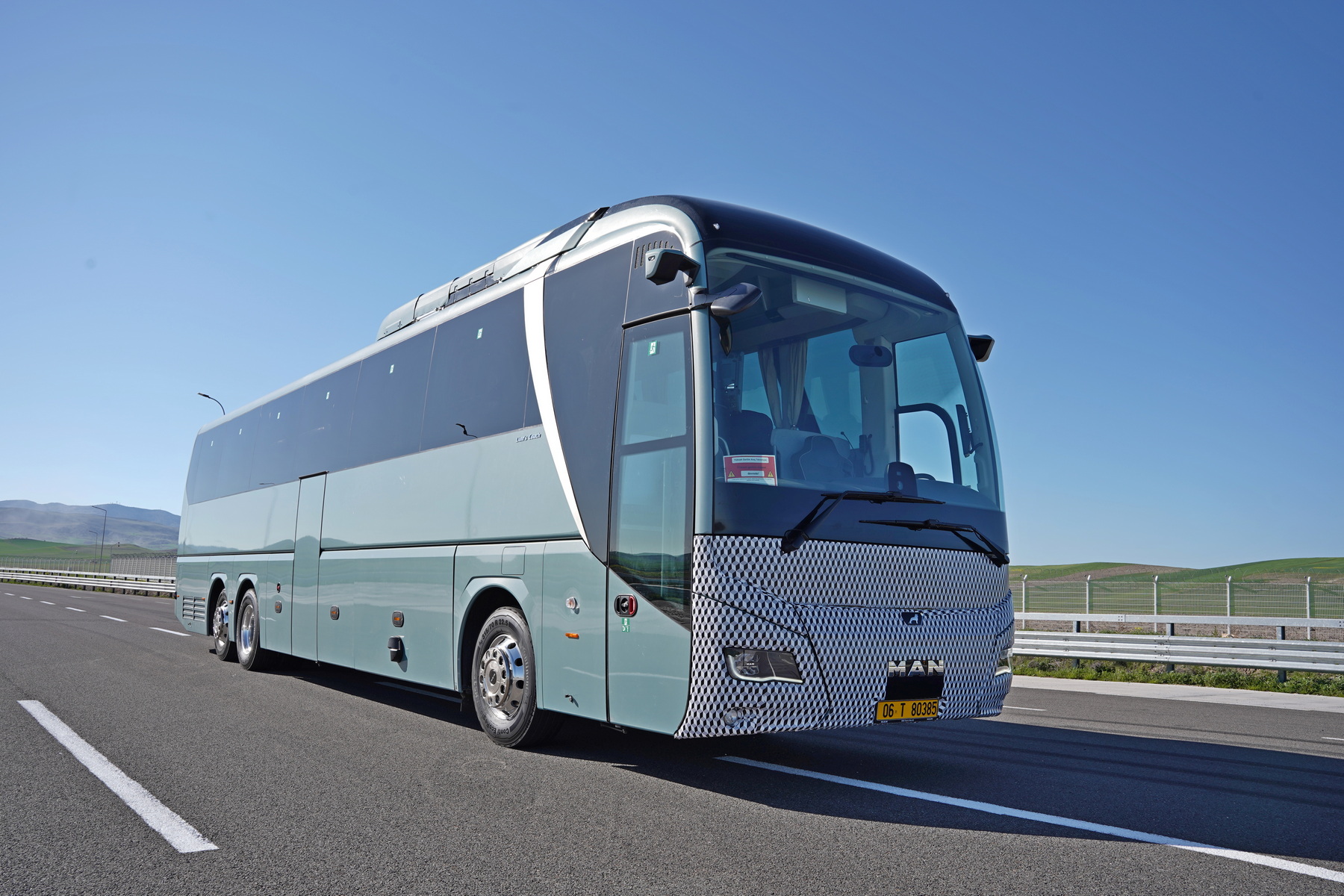
The basic concept of the e-coach is based on the packaging of the tried-and-tested Lion's Coach, which was unveiled in 2017. In the first stage, it will hit the road as a 13.9 m long, compact three-axle vehicle with a maximum technically permissible gross vehicle weight of 27.3 tonnes, the Lion's Coach 14 E three-axle coach. MAN will gradually roll out further models in the coach segment by the turn of the decade. The start of series production is planned for 2026 at the MAN plant in Ankara, Türkiye. “The first electric coach from a major European manufacturer marks the beginning of a new era of emission-free and low-noise travel, which many customers have been waiting for. We are delighted to be at the forefront here and to be putting such a dynamic and innovative bus on its wheels,” says Heinz Kiess, Head of Product Marketing Bus at MAN Truck & Bus. The Lion's Coach E has a MAN eCD330 electric central motor, a synchronous motor (PSM) installed in the middle under the rear battery pack. The maximum drive and braking power of 330 kW (449 hp) is permanently available and is available at 2,740 to 5,500 revolutions per minute. Maximum torque is typically available from the first revolution. The engine is coupled with an automated MAN TipMatic 4 four-speed gearbox manufactured in-house.
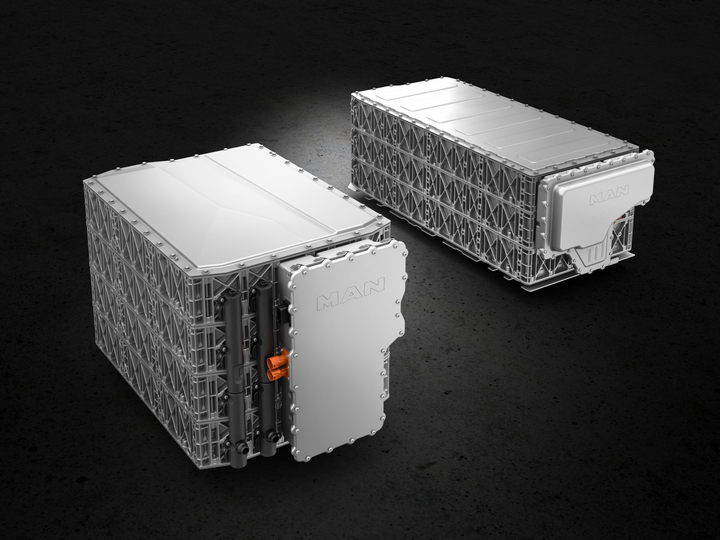
The nickel manganese cobalt oxide (NMC) lithium battery packs come from MAN's long-established site in Nuremberg, whose new battery production facility was recently inaugurated. The battery modules each store 89 kWh per pack and their cell chemistry and structure have of course been specially developed for use in commercial vehicles. They will be mass-produced at the Nuremberg plant from 2025. The battery capacity is modularly distributed over four to a maximum of six packs - for a range appropriate to the application - which means an energy capacity of 356 to 534 kWh. Four battery packs are installed in the rear as standard, while one or two additional batteries can be installed in front of the rear axle on request. The batteries and their production comply with the bus-specific ECE-R66.02 overturning directive. The MAN battery management system (BMS) ensures that the batteries are always in optimum operating condition with regard to the charging status of the individual cells, voltage and current monitoring, optimum temperature regulation and insulation monitoring during charging and driving. The safety of the high-performance batteries in the vehicle floor is of immense importance in the comprehensive safety concept of the Lion's Coach E. This starts with the stable safety cage, which is conceptually and materially modelled on the frame of the bus and extensively crash-optimized. It effectively prevents damage to the batteries in the event of a rear or side impact. Despite the battery packs, the coach offers a sufficient luggage compartment with a minimum of 11 cubic metres of luggage volume for the maximum 61 passengers and a maximum of 13 cubic metres (including around two cubic metres in the luggage racks).
The characteristic design language of MAN buses, ‘Smart Flow Design’, has been further developed including a new ‘brand face’, an aerodynamically optimised design of the rear section and an innovative interpretation of the B-pillar look in conjunction with striking roof edge cladding. The aerodynamic drag coefficient (Cd value) is lowered from 0.34 to 0.31. The MAN Lion's Coach E has the new electronics platform, which has been used in all MAN and NEOPLAN buses since model year 2024. The digital instruments provide easy-to-read information on range, battery status and other parameters, "almost playfully encouraging the driver to drive efficiently". To prepare bus companies for the new era MAN's holistic eMobility Consulting advices on suitable vehicles, this also includes consideration of customer-specific operating conditions, cost optimisation, route analysis, fleet optimisation and, building on this, the necessary advice on charging infrastructure. Additional support is provided by digital tools such as the MAN eManager, a fleet management system. Lion's Coach E fulfils both social requirements for climate protection and customer wishes for sustainable travel. The European requirements for fleet CO2 emission limits by 2030 currently envisage a reduction of 43 per cent for intercity buses and coaches, which is then to be increased to 64 per cent by 2035 and 90 per cent by 2040.